


Happy Days
Publisher: Faber and Faber
Format: Paperback
ISBN: 0571066534
Welcome to Happy Days (1976) by Samuel Beckett (Faber & Faber), ISBN 0571066534 — a title that arrives with a grin so dry it could sand wood, then immediately demonstrates Beckett’s signature trick: making you laugh, wince, and stare into the existential middle distance… often in the same sentence.
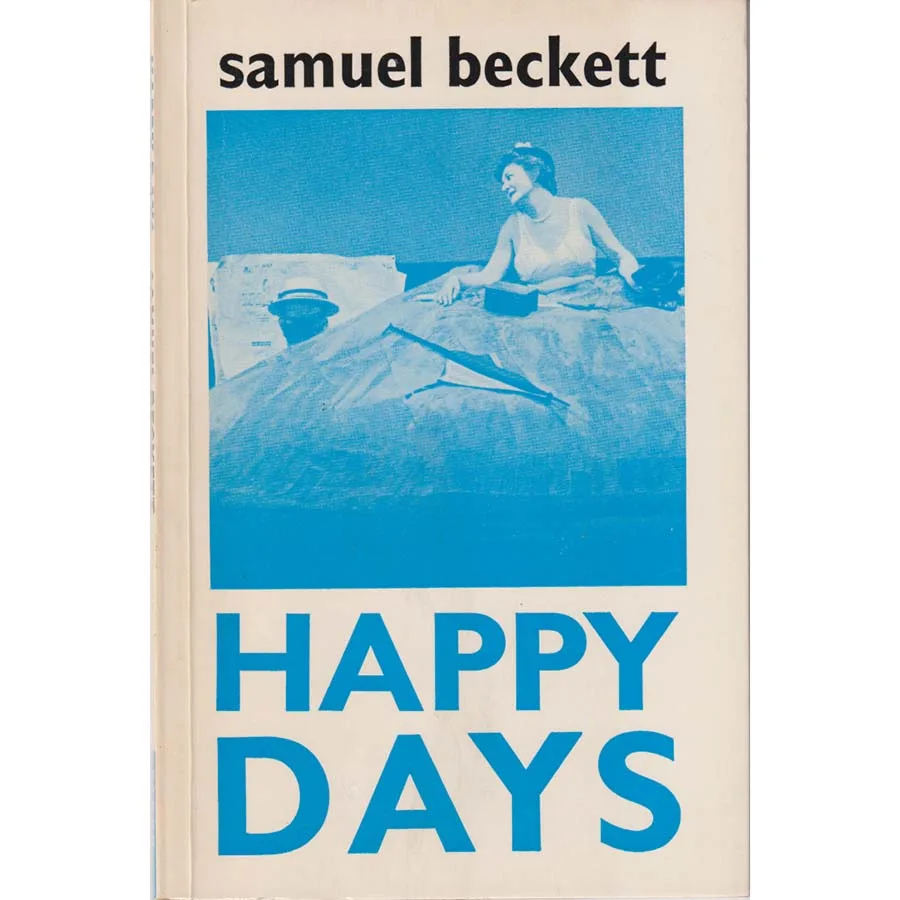
If you don’t know it: this is the play where optimism is a survival technique and the set design is, frankly, a personal attack. Winnie is literally stuck — first up to her waist, later up to her neck — in a mound of earth, under a blazing light, determined to keep talking, keep performing normality, keep calling it a “happy day” as the universe quietly proves it has no interest in your branding. Nearby is Willie, her mostly silent companion, present in that haunting way only Beckett can manage: the human relationship reduced to proximity, habit, and the occasional grunt of acknowledgement.
It’s comedy. It’s tragedy. It’s also a strangely accurate portrait of what it feels like to be a person with a mind that won’t stop narrating your life even when your life is basically a slow-motion disaster. Winnie’s chatter is both heroic and terrifying: she clings to routine, objects, memories, little rituals — a toothbrush, a handbag, a phrase — like they’re lifelines. And Beckett, being Beckett, makes those lifelines simultaneously ridiculous and desperately human.
The irony, of course, is that Happy Days is one of the bleakest, funniest, most oddly comforting pieces of theatre you can read. It’s about endurance. It’s about time. It’s about the ways we fill silence to avoid hearing what silence is saying. And it’s about the frightening resilience of the human spirit, which will insist on a cheery tone even as the sand rises.
This 1976 Faber & Faber edition is the right vessel for it: clean, serious, slightly austere — the kind of book that looks like it belongs on a shelf with other works that have made people whisper “brilliant” and then look mildly traumatised. Condition: Good, meaning it’s been read and lived with. Expect some honest wear, but nothing that stops it doing its job: delivering Beckett’s precise, strange music with full force.
Perfect for:
-
theatre lovers and Beckett devotees,
-
readers who enjoy dark comedy and philosophical bite,
-
anyone fascinated by language as both comfort and trap,
-
and people who suspect that “fine, really” is sometimes the most revealing sentence in the world.
Sold by Crappy Old Books, naturally — because where else would a play about cheerfully narrating your own slow sinking end up, if not waiting patiently for the next reader to open it, laugh at the wrong moment, and quietly reconsider the concept of a “happy day.”
Keep browsing: See more Poetry books Other books by Samuel Beckett
